
A boat bill of sale is a written legal document that confirms the sale and transfer of a boat from a seller to a buyer, showing the buyer as the new legal owner. It records key details such as buyer and seller information, boat specifications (make, model, year, and Hull Identification Number), sale price, date of sale, and any included items like a motor or trailer.
Boat Bill of Sale
Please Select State
AlabamaAlaskaArizonaArkansasCaliforniaColoradoConnecticutDelawareFloridaGeorgiaHawaiiIdahoIllinoisIndianaIowaKansasKentuckyLouisianaMaineMarylandMassachusettsMichiganMinnesotaMississippiMissouriMontanaNebraskaNevadaNew HampshireNew JerseyNew MexicoNew YorkNorth CarolinaNorth DakotaOhioOklahomaOregonPennsylvaniaRhode IslandSouth CarolinaSouth DakotaTennesseeTexasUtahVermontVirginiaWashingtonWest VirginiaWisconsinWyoming
Looking for Other Bill of Sale Categories?
What is a Boat Bill of Sale?
A boat bill of sale is a legal document that records the transfer of ownership of a boat or vessel (also called a watercraft) from a seller to a buyer. It provides official proof that the boat has been sold and purchased under agreed terms on a specific date.
What It Usually Includes
- It includes buyer and seller details
- Boat details
- Make
- Model
- Year
- Hull Identification Number (HIN)
- Odometer reading (hours)
- Sale price and date of sale
- Information on included items (motor, trailer, accessories)
- Statement that the boat is sold “as-is” (unless otherwise agreed)
- Signatures of both parties (sometimes notarized)
Why It’s Important
- Required for registration and title transfer in many states/countries
- Protects both buyer and seller legally
- Helps with tax, insurance, and ownership records
Types of Boat Bill of Sale
- Canoe
- Catamaran
- Kayak
- Motor / Powerboat
- Rowboat
- Sailboat
- Skiff
- Tugboat
- Yacht
Boat Bill of Sale Rules and Legal Uses
A boat bill of sale is used in various important situations related to buying, selling and owning a boat. Here are some of rules and legal uses listed below:
- Transferring of Ownership: It officially proves that the ownership of the boat has been transferred from the seller to the buyer.
- Boat Registration and Titling: Many states in the US require a Boat Bill of Sale to register the boat or transfer the title with local boating or motor vehicle authority.
- Legal Proof of Sale: This document serves as legal evidence of the transaction in case of disputes regarding ownership, payment, or sale terms.
- Insurance Purposes: Insurance companies may request a Boat Bill of Sale to issue a new policy or transfer coverage to the new owner.
- Tax and Financial Records: It helps buyers and sellers maintain accurate tax records, including sales tax and asset reporting.
- Selling Used Boat: For private sales, especially of used boats, a bill of sale is often the only formal document that records the transaction.
- Including Motor and Trailer Details: When a boat is sold along with its engine or trailer, the bill of sale documents all included items in the sale.
- Paying sale tax: State tax offices use the price listed on the form to figure out how much tax the buyer owes.
- Ending your liability: It protects the seller by providing they no longer own the boat if it's involved in an accident later.
- Applying for a loan: If you are financing the boat, your bank will definitely ask for a copy of the bill of sale.
Boat Bill of Sales PDF
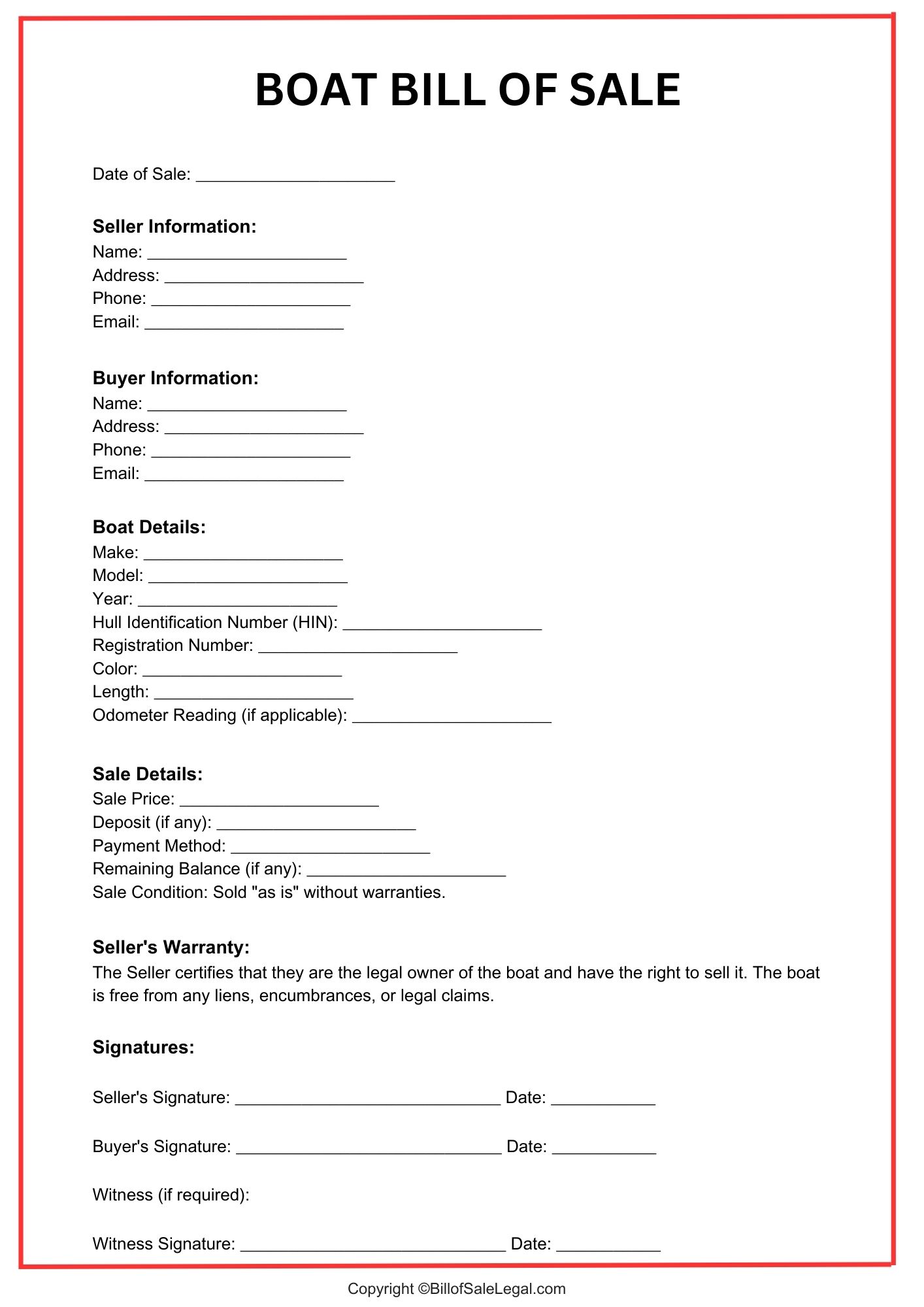
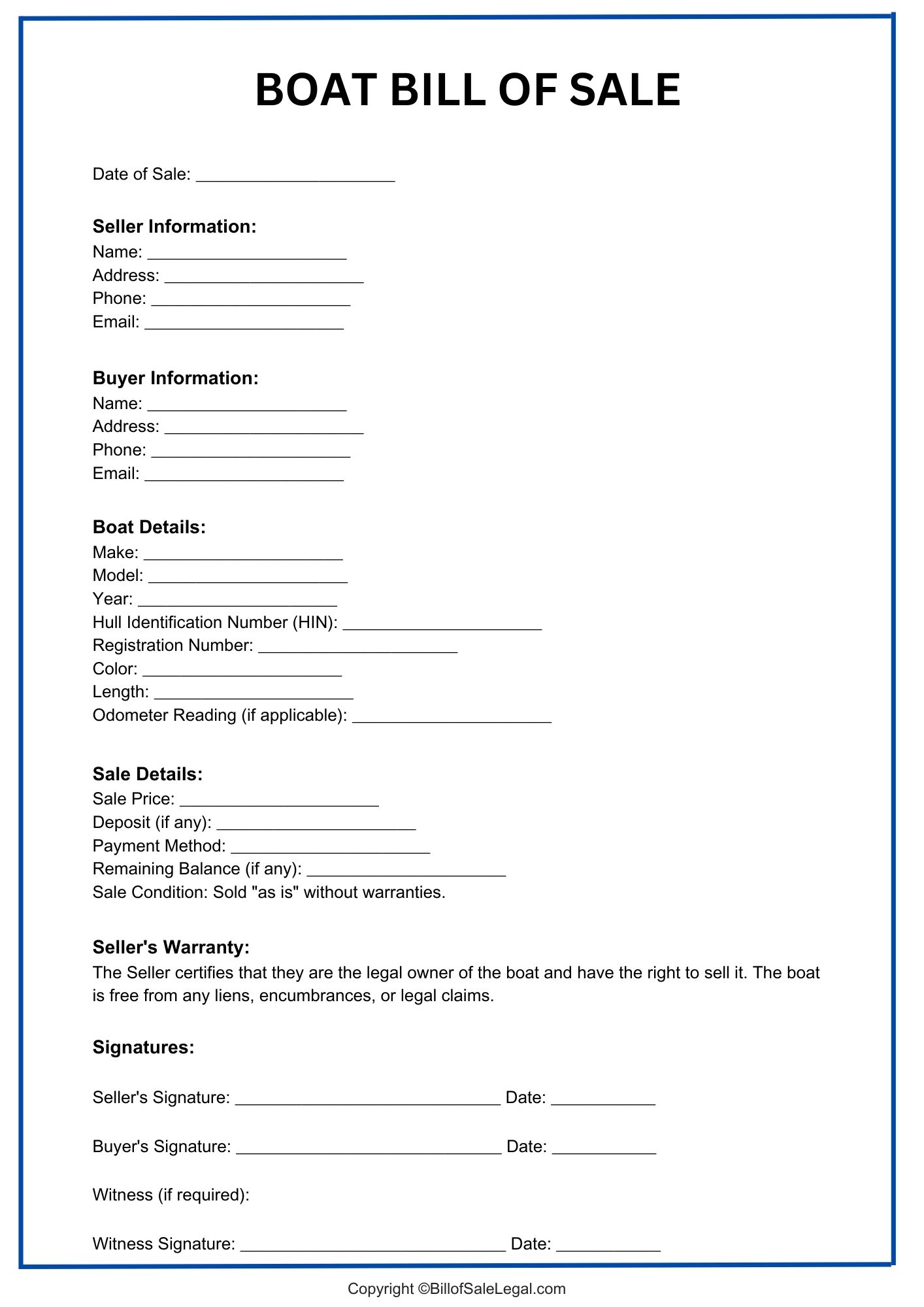
A Boat Bill of Sale PDF is a printable legal document used to record the sale and ownership transfer of a boat or vessel. It allows buyers and sellers to easily enter details such as boat information, sale price, and date of sale. This PDF format is commonly required for boat registration, title transfer, insurance, and tax purposes, making it a convenient and reliable option for boat transactions.
Boat Bill of Sale Format — Preview & Download
Boat bill of sale forms are available in different formats to suit various sale situations and legal requirements. The most commonly used formats are listed below:
- Standard Boat Bill of Sale: It is the most commonly used format for transferring ownership of a boat. This includes buyer and seller details, boat information, sale price, and signatures.
- Boat, Motor, and Trailer Bill of Sale: It is used when the boat is sold along with its motor and trailer. All three items are listed with their identification details in one document.
- As-Is Boat Bill of Sale: In this format states that the boat is sold in its current condition, with no warranties or guarantees from the seller.
- Notarized Boat Bill of Sale: Some states like Arizona, Kentucky, Maryland and more require notarization for legal validity. This format includes a notary acknowledgment section.
- Simple Boat Bill of Sale: In private sales, covering only essential details of the transaction this format used and it is basic and easy to use.
- State-Specific Boat Bill of Sale: States like Alabama, Arizona, California, Colorado, Florida and many more provide their own official boat bill of sale templates to meet local registration and titling requirements.
Maritime Law and Boat Sales in the United States
Maritime law affects boat sales in the United States by defining ownership rights and legal responsibilities. Most boat transactions follow the Uniform Commercial Code (UCC), which makes a boat bill of sale a legally binding contract.
A key part of maritime law involves maritime liens. In simple terms, any unpaid debts related to the boat—such as repair bills or dock fees—remain attached to the vessel itself, not the owner. If a buyer purchases a boat with these outstanding debts, they may become responsible for them.
This is why a proper boat Bill of Sale is important, as it helps prove that the boat was purchased free and clear of undisclosed liabilities.
FAQs Related to Bill of Sale for Boat
In almost every state, a boat bill of sale is required to complete a legal boat transaction, especially for registration and tax purposes.
It depends on the state and the size of the boat. For small boats and non titling states, the bill of sales is more than enough. However, if the boat is large or comes from states that issue title you will usually need both the bills of sale and physical title signed over to you to complete the registration.
To legally take ownership, you must pay the seller, get a signed boat bill of sale, and obtain the previous title or registration card. You then take these documents to your state boat registration agency.
As-Is means the buyer is taking the boat in its current condition, faults and all. It means the seller isn't responsible to fix anything once the money changes hands. Most private boat sales in the US are done this way.