
A firearm Bill of Sale is a formal written record that documents the transfer of a firearm from one party to another, serving as proof that the gun has legally changed ownership. It captures essential details such as the buyer and seller’s names and addresses, a description of the firearm including make, model, caliber and serial number, the agreed sale price and the date of the transfer. This documentation provides legal clarity, protects both parties and helps ensure the transaction is transparent and enforceable.
Firearm Bill of Sale
Please Select State
AlabamaAlaskaArizonaArkansasCaliforniaColoradoConnecticutDelawareFloridaGeorgiaHawaiiIdahoIllinoisIndianaIowaKansasKentuckyLouisianaMaineMarylandMassachusettsMichiganMinnesotaMississippiMissouriMontanaNebraskaNevadaNew HampshireNew JerseyNew MexicoNew YorkNorth CarolinaNorth DakotaOhioOklahomaOregonPennsylvaniaRhode IslandSouth CarolinaSouth DakotaTennesseeTexasUtahVermontVirginiaWashingtonWest VirginiaWisconsinWyoming
Looking for Other Bill of Sale Categories?
What is the Firearm Bill of Sale?
A Firearm Bill of Sale is an official document that records the sale and transfer of a gun from one person or business to another. Unlike verbal agreements, this written record provides clear proof of the transaction by listing important details such as the buyer and seller’s names and addresses, the firearm’s make, model, caliber, serial number, sale price, and date of transfer. Many individuals use a Firearm Bill of Sale Template to ensure all required legal details are included.
This document protects both parties: the buyer gains proof of legal ownership, and the seller has evidence that responsibility for the firearm has been transferred. In the United States, it can also help comply with state and federal laws, support background checks, and serve as a record for registration, insurance, or legal matters. Whether for private sales, estate transfers, or business transactions, it ensures the process is transparent, legally recognized, and properly documented.
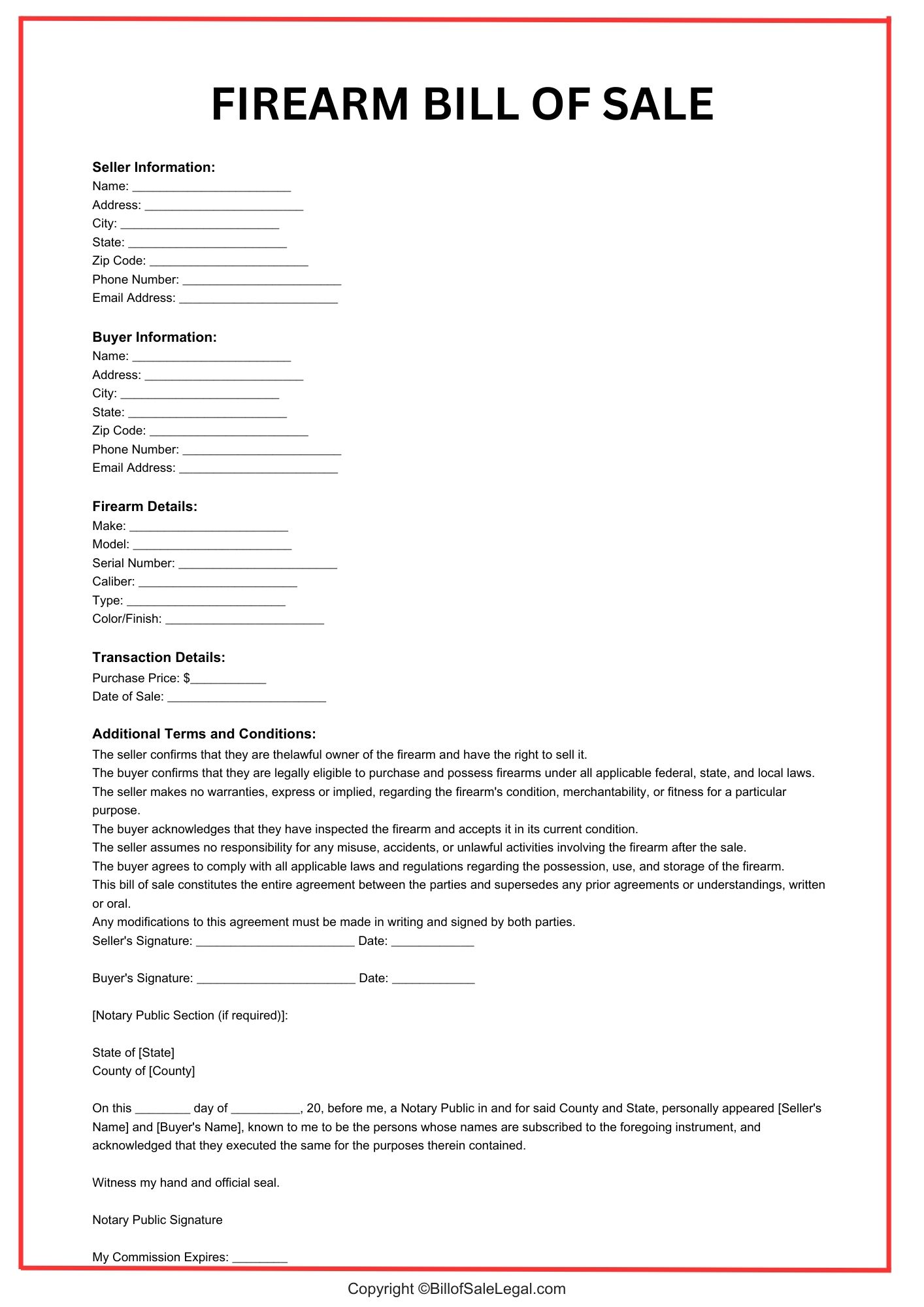
Firearm Bill of Sale Format — Preview & Download
How to Make a Firearm Bill of Sale?
Selling a firearm legally and safely requires careful attention, and the sale document is a key part of the process. You can create your own document or use a pre-made Firearm Bill of Sale Form to simplify the process. Or go with the below steps:
Know Your State and Federal Laws: Before selling, understand the regulations that apply where you live. Federal law prohibits certain individuals from owning firearms and some states have additional requirements for private sales, including background checks or waiting periods.
Verify the Buyer: Ensure the buyer is legally allowed to own a firearm. In states where background checks are required for private sales follow the process. Always ask for valid identification and check age requirements.
Gather Firearm Details: Record all essential information about the firearm, including the make, model, caliber and serial number. Note any special features or accessories included in the sale.
Draft the Bill of Sale: Create a clear, written Firearm Bill of Sale that includes:
- Buyer and seller names and addresses
- Firearm details (make, model, caliber, serial number)
- Sale price and payment method
- Date of sale
- Any terms or conditions, such as “as-is” statements
Sign and Date the Document: Both parties should sign and date the bill of sale to make it official. If your state requires notarization, complete that step to ensure legal validity. Both parties should keep a copy of the Firearm Bill of Sale PDF for their records for greater convenience and secure storage.
Keep Copies for Records: Both buyer and seller should keep a copy of the Firearm Bill of Sale for their records. This provides proof of ownership and protects the seller from future liability.
Transfer the Firearm Safely: Arrange a safe and secure method for handing over the firearm. Follow all applicable safety and transportation laws to avoid any risk during the transfer.
Legal Requirements in the US
Selling or transferring a firearm in the United States comes with a mix of federal rules and state‑specific laws that you must understand before completing a sale. Following these requirements helps protect both the buyer and the seller and ensures the transaction is lawful.
Federal Laws Governing Firearm Sales: At the federal level, the Gun Control Act of 1968 and the Brady Handgun Violence Prevention Act set the rules for selling firearms. Licensed dealers (FFLs) must run a background check through the National Instant Criminal Background Check System (NICS) before selling a gun. This system checks for criminal records and other reasons a person cannot own a firearm. Private sellers usually do not have to run a background check if they sell to someone they know in the same state. However, they cannot sell to anyone who is legally prohibited from owning a gun. This is sometimes called the “gun show loophole,” because private sales can happen without a mandatory check unless state law requires it.
State‑Specific Rules for Private Sales and Background Checks: States can set their own rules for Firearm Bill of Sale in addition to federal law. Some states, like California, Maryland, Illinois and New York, require background checks for all sales, including private transfers. Other states do not require checks for private sales but still prohibit selling to people who are not allowed to own guns, such as felons or those with certain mental health restrictions. Not following these state rules can lead to fines or criminal charges.
Age Restrictions and Prohibited Buyers: Federal law sets the minimum age to buy a gun from a licensed dealer18 for rifles or shotguns and 21 for handguns. States can set stricter age rules, and some require buyers to be 21 for all guns, even in private sales. Federal law also bans selling firearms to certain people, including felons, fugitives, those under domestic violence restraining orders or illegal drug users. Selling to someone you know or should suspect is prohibited is against the law.
Common Mistakes to Avoid
When creating a firearm bill of sale, it’s important to avoid common mistakes. Leaving out key details about the gun, such as make, model or serial number, can cause confusion or legal issues. Failing to check that the buyer is legally allowed to own a firearm is also risky. Sellers should always keep a copy of the bill of sale for their records and they must follow all state-specific rules to ensure the sale is legal. Paying attention to these points helps make the transaction safe and properly documented.
FAQs Related to Bill of Sale for FireArm
Yes, it provides proof of ownership and protects both the buyer and seller in case of disputes.
No, private sales across state lines must go through a licensed dealer in the buyer’s state.
Yes, a bill of sale is useful for documenting firearms in estate settlements, business sales or asset transfers.
Keep a copy for several years, as it may be needed for legal, insurance or tax purposes. Keeping a digital Firearm Bill of Sale PDF is also recommended.
Include buyer and seller information, firearm details (make, model, caliber, serial number), sale price, date, signatures and any “as-is” or warranty terms.