
A DMV Bill of Sale is an essential legal document used in the United States to record the sale or transfer of motor vehicles between two parties. It acts as written proof that ownership of a vehicle has changed hands from the seller to the buyer. This document is commonly required by state Departments of Motor Vehicles (DMVs) when registering a vehicle, transferring a title, or paying applicable taxes and fees.
DMV Bill of Sale
Please Select State
AlabamaAlaskaArizonaArkansasCaliforniaColoradoConnecticutDelawareFloridaGeorgiaHawaiiIdahoIllinoisIndianaIowaKansasKentuckyLouisianaMaineMarylandMassachusettsMichiganMinnesotaMississippiMissouriMontanaNebraskaNevadaNew HampshireNew JerseyNew MexicoNew YorkNorth CarolinaNorth DakotaOhioOklahomaOregonPennsylvaniaRhode IslandSouth CarolinaSouth DakotaTennesseeTexasUtahVermontVirginiaWashingtonWest VirginiaWisconsinWyoming
Looking for Other Bill of Sale Categories?
What Is a DMV Bill of Sale?
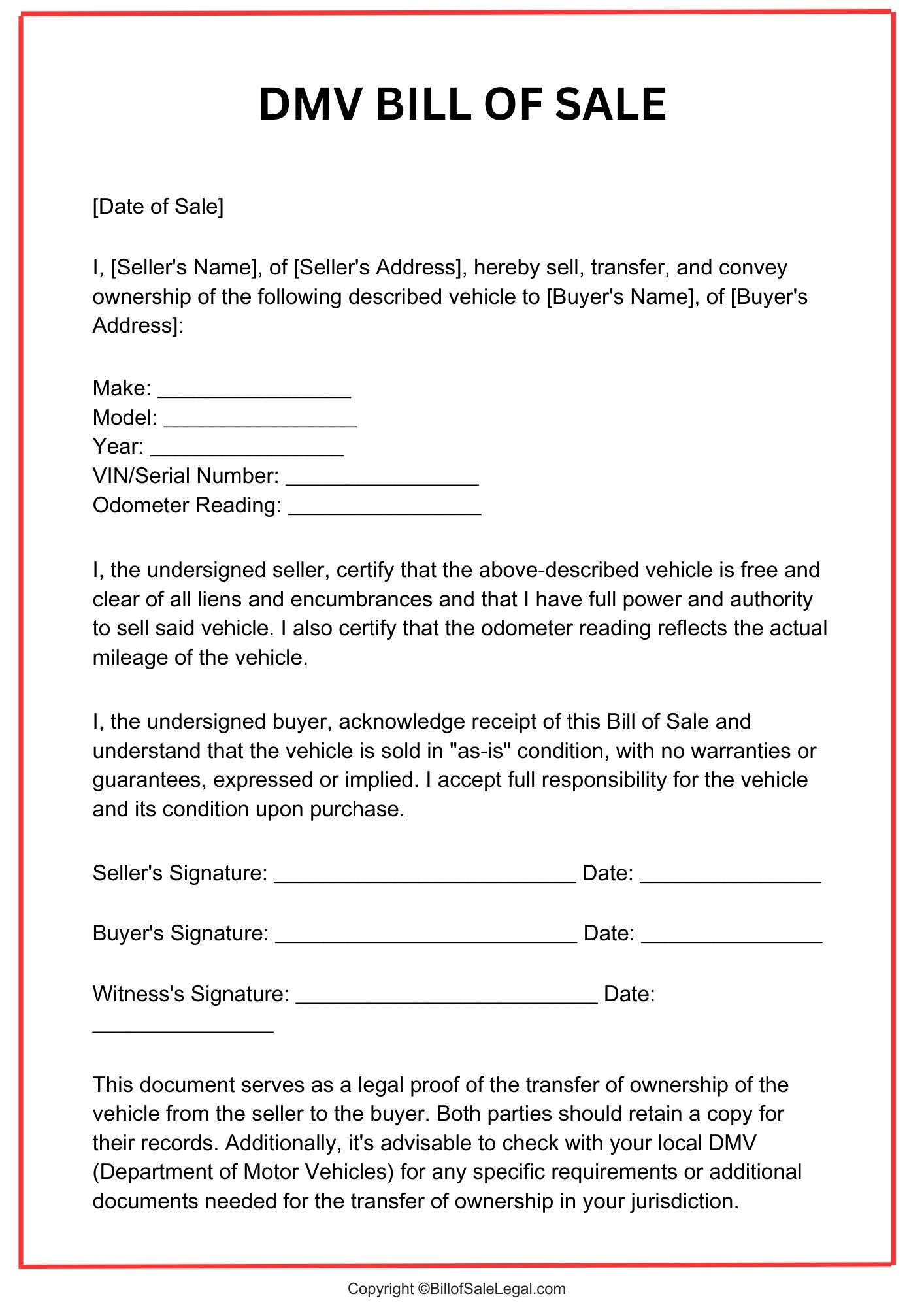
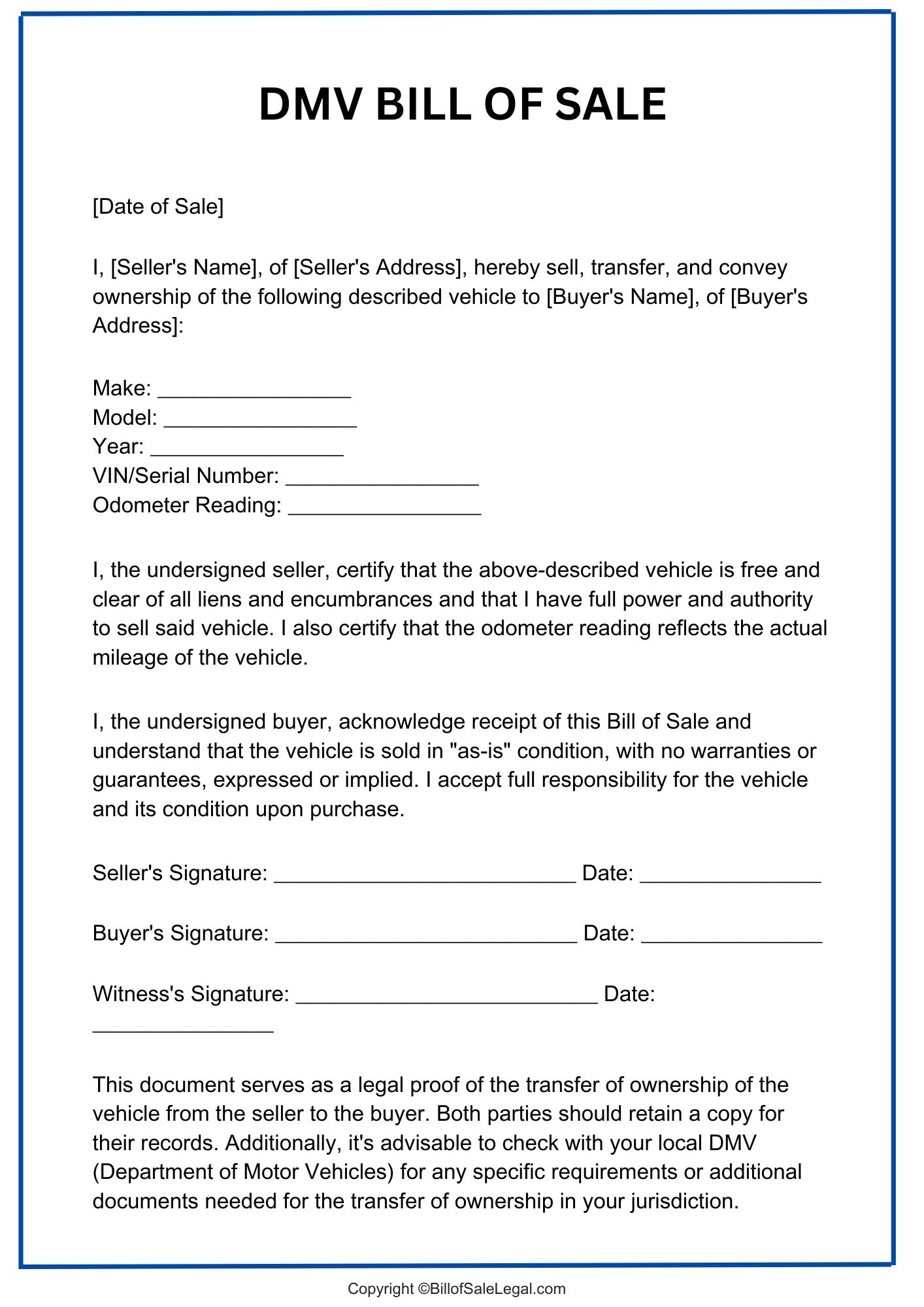
A DMV Bill of Sale is a legal document that records the sale or transfer of a motor vehicle from one person to another. It serves as written proof that the buyer has purchased the vehicle and that the seller has released ownership. This document typically includes details such as the names and addresses of the buyer and seller, the vehicle’s make, model, year, Vehicle Identification Number (VIN), sale date, purchase price, and the signatures of both parties.
In many U.S. states, the Department of Motor Vehicles (DMV) requires a Bill of Sale when registering a vehicle, transferring a title, or calculating sales tax. Even in states where it is not mandatory, a DMV Bill of Sale is strongly recommended because it helps prevent disputes, supports legal compliance, and protects both the buyer and seller in case of future ownership or liability issues.
Common Uses of a DMV Bill of Sale
- Vehicle Title Transfer: Helps complete the legal transfer of ownership with the DMV.
- Vehicle Registration: Required in many states when registering a newly purchased vehicle.
- Proof of Purchase: Serves as written evidence that the vehicle was purchased.
- Tax Calculation: Used by the DMV to calculate applicable sales and use tax amounts.
- Private Vehicle Sales: Especially helpful when selling or buying a vehicle without involving a dealer.
- Legal Protection: Protects both parties in case of legal disputes.
- Record Keeping: Helps maintain clean records for future reference or resale.
Available DMV Bill of Sale Format — Preview & Download
DMV Bill of Sale forms are available in several formats to meet different state requirements and transaction types. Many state DMVs provide official, state-specific Bill of Sale templates that follow local laws. These forms are usually available for download on official DMV websites.
Generic DMV Bill of Sale formats are also widely used and accepted in states that do not require a specific form. These templates can be customized for cars, motorcycles, boats, or trailers. Some formats are printable PDFs, while others are editable digital documents. Certain states may require notarization or additional disclosures, such as odometer statements. Choosing the correct format ensures the document meets DMV requirements and helps avoid delays during title transfer or registration.
Why a DMV Bill of Sale Is Important
A DMV Bill of Sale is important because it provides legal proof of a vehicle transaction and protects both the buyer and the seller. For buyers, it confirms ownership and supports vehicle registration, insurance, and tax-related processes. For sellers, it shows that responsibility for the vehicle has been transferred, helping protect them from future liabilities such as accidents, tickets, or unpaid fees.
The document also reduces the risk of fraud by clearly listing transaction details. In disputes involving payment, ownership, or vehicle condition, a Bill of Sale can serve as key evidence. Additionally, many DMVs rely on it to calculate taxes accurately. Overall, this document ensures transparency, accountability, and compliance with state vehicle laws.
FAQs Related to Bill of Sale for DMV
Yes, a DMV Bill of Sale can be used to document a gifted vehicle. In such cases, it often shows a purchase price of $0 or is marked as a “gift.”
Most states require a purchase price or declared value, even if the vehicle was transferred for free.
Many states require a DMV Bill of Sale even when transferring a vehicle between family members.
Yes, it is commonly used when registering or transferring a vehicle that was purchased or titled in another state.
It is best to keep a copy for several years for tax, legal, and ownership record purposes.
Minor errors can usually be corrected, but both the buyer and seller should initial any changes to avoid issues.
Some states accept digital copies, but many still require a printed and signed version for official use.
No, a DMV Bill of Sale records the transaction details but does not guarantee or certify the mechanical condition of the vehicle.