Menu

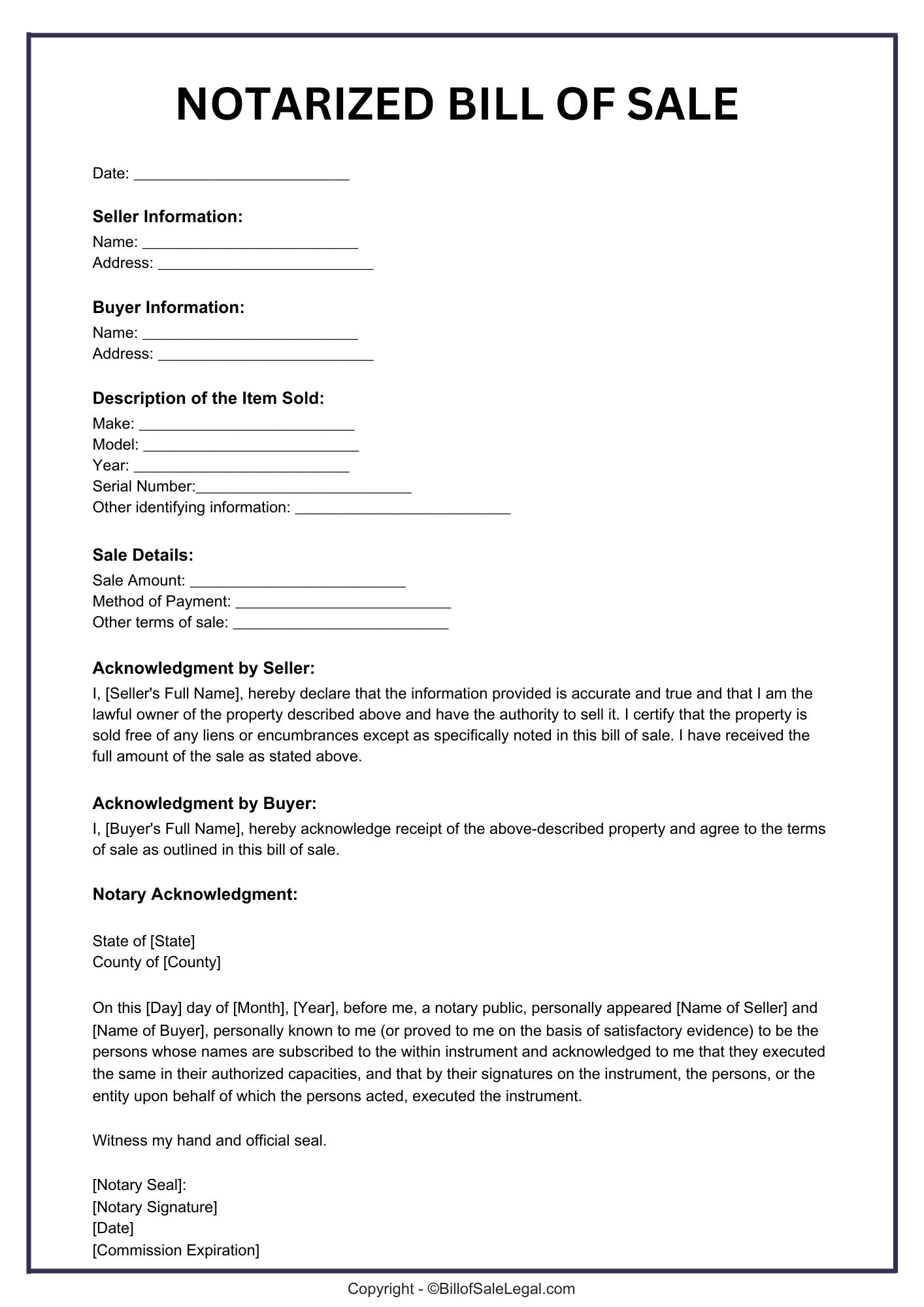
A Bill of Sale template refers to a prepared document that assists buyers and sellers to document important details of the transactions when the ownership is being transferred. It records valuable details including the description of item, its condition, amount sold, names of both persons and signatures. A Bill of Sale template is also a good way to be clear, legally safe and buying or selling without a threat of a loss.
To register transactions of personal property, vehicle, or equipment fast, get a free printable Bill of Sale template.
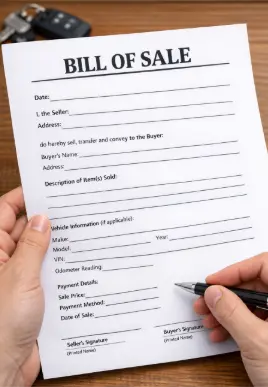
Bill of Sale is a legal document that acknowledges a change in ownership of an object between a seller and a buyer. It contains details of the parties involved, the details of the item, the selling price and terms and conditions. The document is useful in averting disputes, as it is used to establish ownership, and tends to be a requirement in registering a vehicle, acquiring a loan, or maintaining proper personal records.
Please Select Category
There are two major types bill of sale template.
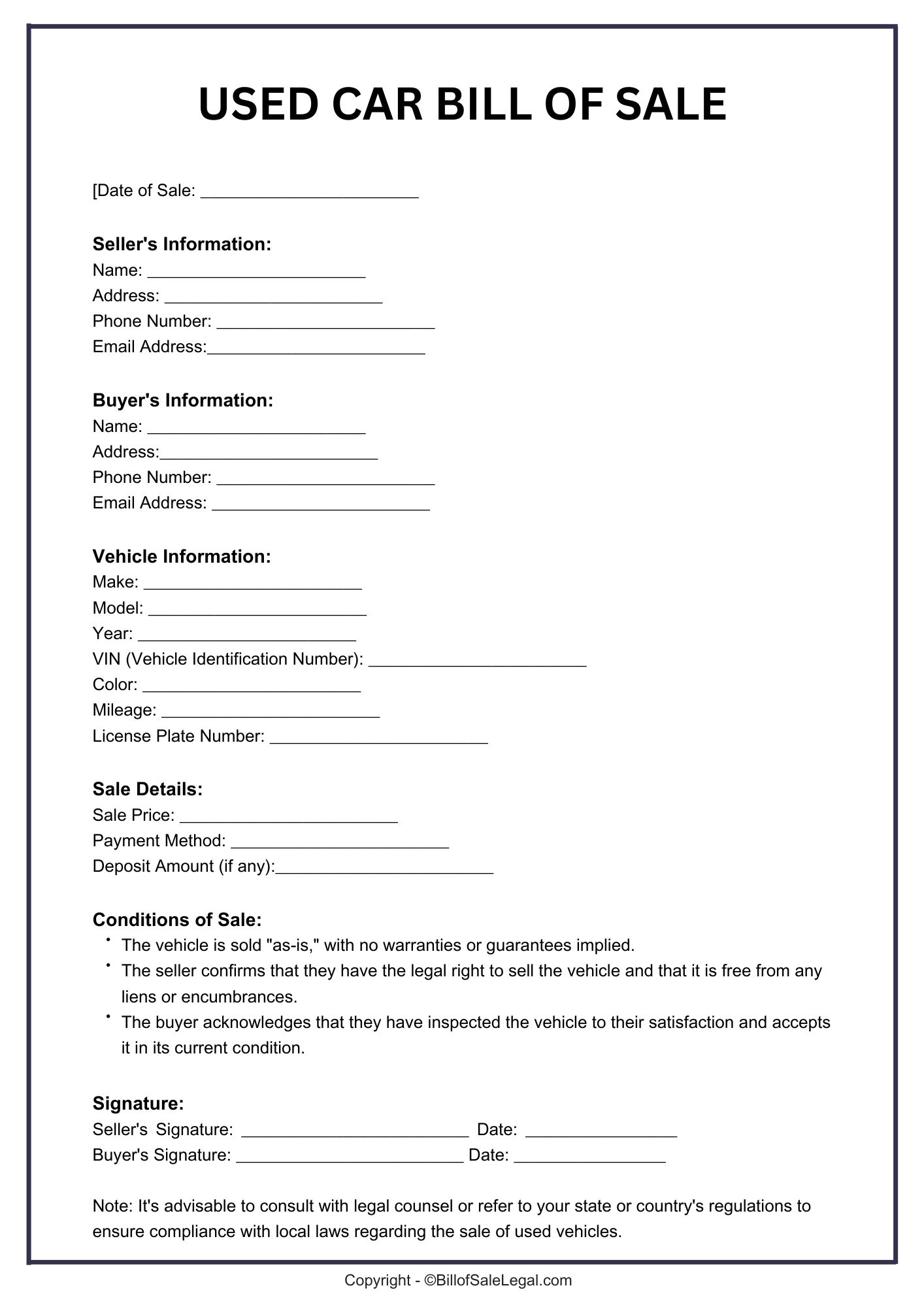
There are two main Bill of Sale templates, which include general and vehicle-specific Bill of Sale templates. Items that are used in daily life such as electronics, tools, furniture, and equipment are sold using a general Bill of Sale. Other fields are also added in a vehicle Bill of Sale; these are VIN, mileage, plate number, and vehicle condition and have better protection under the law when it comes to transactions of high value.
Please Select State
When writing a Bill of Sale, it should be done with special attention to detail in order to make the transaction to be clear, transparent and not illegal. Follow these detailed steps:
Buyer identification Phase
Write the full legal name, address and contact of the buyer.
Add seller details
Add full name, address, and contact details of the seller.
State the Terms of the Sale
Write about the product in detailed description of makes, model, serial numbers, brand, color, features, and any identifying marks.
Indicate the state of the item
State whether the item is new, used, refurbished or sold as-is.
Enter purchase price
Add the agreed price and currency at the time of purchase but do not use vague terms.
Mention payment method
Indicate whether payment is in cash, by check, by bank transfer, online payment, or by installment.
Add date and place of transaction
Add where and when the transaction occurred to assist to authenticate the document.
Include any disclosure or warranties
Including any guarantees or explain that none are made in the sale as-is.
Tariffs of buyer and seller
Both parties are required to sign as a way of confirming the contract; in some states, digital signatures can be used.
Add witnesses or notarization where necessary
Add witnesses or notarization where necessary. Some states have a requirement of notarization of vehicles or property of a high value.
The steps will assist in ensuring that the Bill of Sale is complete, legally clear and reliable to both parties.
It offers legal support of the transfer of ownership and assists in avoiding future disagreements.
Yes, provided it captures all the necessary information and signatures of either side.
Yes, in the vast majority of cases, of vehicles or valuable things.
The use of the digital copy is accepted in most places, which are subject to the local laws.
Yes, it shields the seller against liability once the item has been transferred.