
A Horse Bill of Sale is an important legal document in the United States used to record the sale or transfer of ownership of a horse from one person to another. Horses are valuable animals and are commonly purchased for riding, racing, breeding, farming, shows, or companionship. Because of their value and care requirements, it is essential to properly document the transaction. A horse bill of sale provides written proof that the buyer has legally purchased the horse and that the seller has transferred ownership.
Horse Bill of Sale
Please Select State
AlabamaAlaskaArizonaArkansasCaliforniaColoradoConnecticutDelawareFloridaGeorgiaHawaiiIdahoIllinoisIndianaIowaKansasKentuckyLouisianaMaineMarylandMassachusettsMichiganMinnesotaMississippiMissouriMontanaNebraskaNevadaNew HampshireNew JerseyNew MexicoNew YorkNorth CarolinaNorth DakotaOhioOklahomaOregonPennsylvaniaRhode IslandSouth CarolinaSouth DakotaTennesseeTexasUtahVermontVirginiaWashingtonWest VirginiaWisconsinWyoming
Looking for Other Bill of Sale Categories?
What is a Horse Bill of Sale?
A Horse Bill of Sale is a written legal agreement that confirms the sale of a horse between a seller and a buyer. It serves as proof that ownership of the horse has officially changed hands. In the United States, this document is commonly used in private sales, farm transactions, auctions, and equine businesses. The bill of sale outlines the essential terms of the sale so both parties clearly understand their rights and responsibilities.
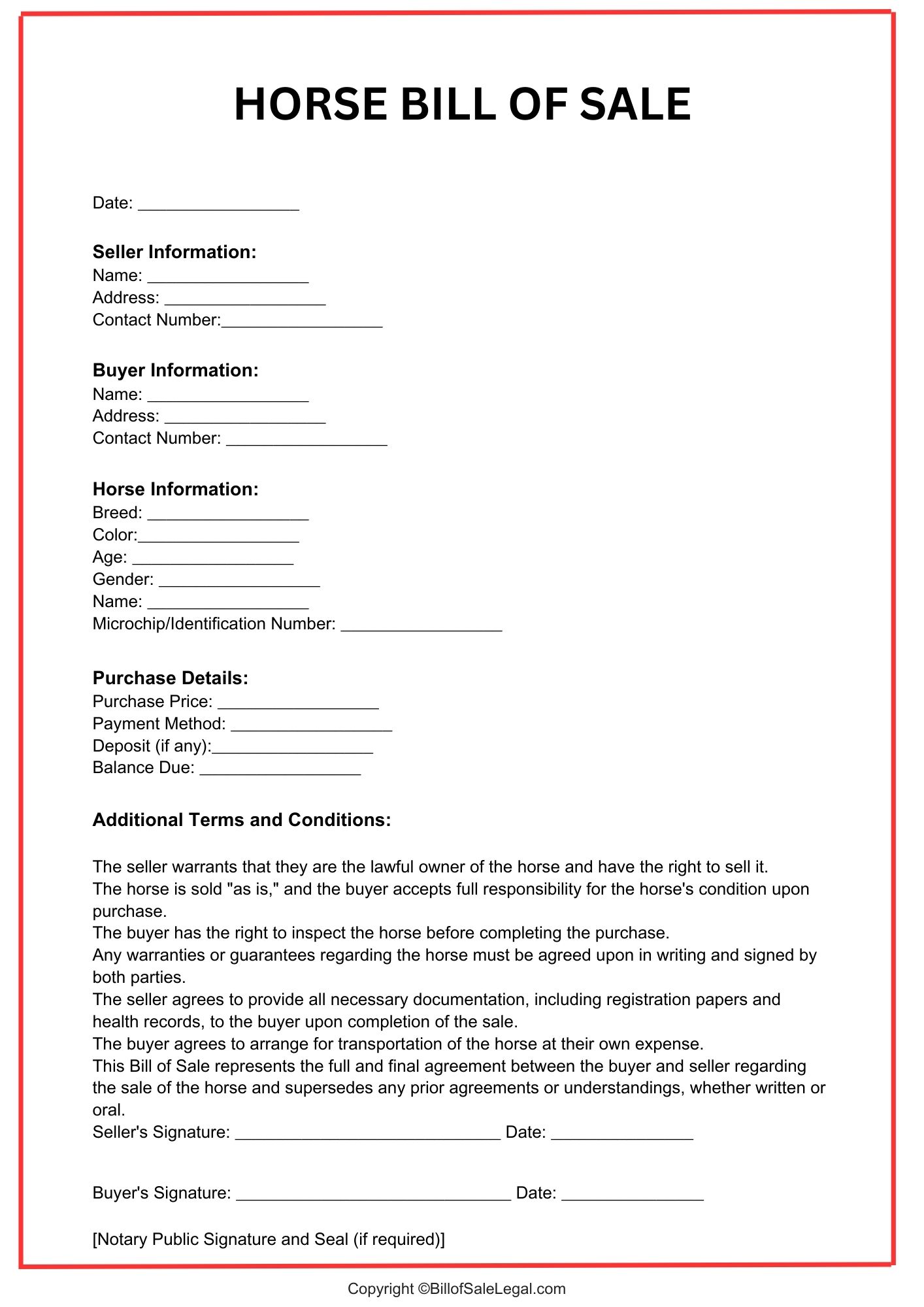
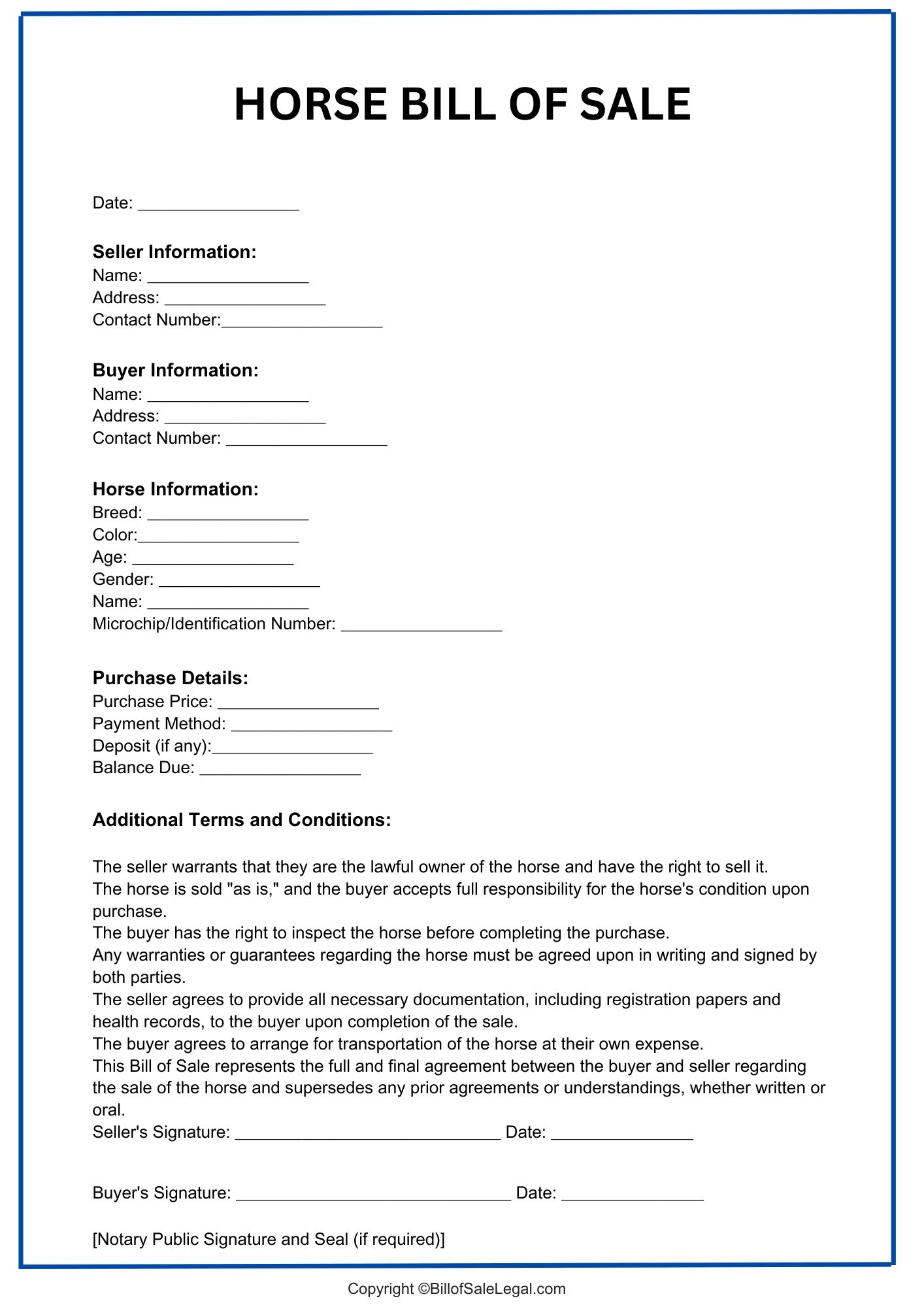
The document includes identifying information about the horse, such as name, age, breed, color, markings, registration number, and health status. It also states the purchase price, payment method, and date of transfer. Some Horse Bills of Sale include clauses related to health guarantees, return policies, or whether the horse is sold As-Is. Once signed by both parties, the document becomes legally binding. Even though not all states legally require a horse bill of sale, it is strongly recommended to protect both buyers and sellers in case of disputes, legal issues, or future ownership claims.
Horse Bill of Sale Format — Preview & Download
Common Uses of a Horse Bill of Sale
A horse bill of sale is used in many situations involving horse ownership, including:
- Private horse sales: Used when one individual sells a horse directly to another without involving a broker or auction.
- Proof of ownership: Helps buyers prove legal ownership for purposes such as registration, insurance, and stable boarding.
- Equine registration transfer: Required by breed registries to transfer a horse’s registration to the new owner.
- Tax and financial records: Used for farm records, accounting, and tax reporting related to livestock sales.
- Dispute prevention: Protects both parties by clearly stating agreed-upon sale terms.
- Horse auctions: Confirms final sale details after a horse is purchased through an auction.
- Insurance and veterinary records: Requested by insurers or veterinarians to verify ownership and establish the horse’s value.
Available Horse Bill of Sale Formats
Horse Bill of Sale documents are available in several formats to suit different transaction types. The most common format is a simple written bill of sale that includes buyer and seller details, horse description, sale price, and signatures. This format is ideal for straightforward private horse sales.
Another option is a detailed Horse Bill of Sale that includes additional clauses such as health warranties, soundness guarantees, breeding rights, or return conditions. This format is often used for high-value horses, racehorses, or breeding stock. Some sellers also prefer a Horse Bill of Sale that clearly states the horse is sold “As-Is,” meaning no guarantees are provided.
A Horse Bill of Sale may be prepared as a printed document, downloadable PDF, or digital agreement signed electronically, depending on state acceptance. While notarization is not always required, some parties choose to notarize the document for added legal strength. The right format depends on the horse’s value, state requirements, and the level of protection desired by both parties.
Why Is a Horse Bill of Sale Important?
A Horse Bill of Sale is important because it protects both the buyer and the seller before and after the transaction. For buyers, it serves as legal proof of ownership and confirms that payment was made. This is especially important when registering the horse, obtaining insurance, or boarding it at a stable. Without a bill of sale, ownership disputes can arise, leading to legal or financial problems.
For sellers, the document confirms that ownership has been transferred and limits future liability. If the horse later becomes injured, sick, or involved in an accident, the seller can use the bill of sale as evidence that they are no longer responsible. It also clarifies whether warranties were provided or if the horse was sold As-Is. Overall, it is a simple but powerful document that ensures the horse sale is properly recorded and legally valid.
FAQs Related to Bill of Sale for General
Yes, the document can include installment terms, due dates, and payment methods.
Both the buyer and seller should keep a signed copy for their records.
Usually, a parent or legal guardian must sign on behalf of a minor.
Yes, most states do not require a witness, though having one can add credibility.
Only if both parties agree or if cancellation terms are included in the document.