
A Trailer Bill of Sale is an essential legal document used to record the sale and transfer of ownership of a trailer between a buyer and a seller. Since trailers are widely used for transporting goods, vehicles, boats, animals, and equipment, maintaining proper documentation is important to establish legal ownership. This document clearly records transaction details such as the sale terms, ownership change, and agreed price.
Trailer Bill of Sale
Please Select State
AlabamaAlaskaArizonaArkansasCaliforniaColoradoConnecticutDelawareFloridaGeorgiaHawaiiIdahoIllinoisIndianaIowaKansasKentuckyLouisianaMaineMarylandMassachusettsMichiganMinnesotaMississippiMissouriMontanaNebraskaNevadaNew HampshireNew JerseyNew MexicoNew YorkNorth CarolinaNorth DakotaOhioOklahomaOregonPennsylvaniaRhode IslandSouth CarolinaSouth DakotaTennesseeTexasUtahVermontVirginiaWashingtonWest VirginiaWisconsinWyoming
Looking for Other Bill of Sale Categories?
What is a Trailer Bill of Sale?
An Trailer bill of sale is a legal document that records the transfer of ownership of a trailer from one person to another. It includes essential details such as the names and addresses of the buyer and seller, trailer information, sale price, date of sale, and signatures of both parties. This document confirms that the buyer has legally purchased the trailer and that the seller has willingly transferred ownership.
In many states and countries, transport or motor vehicle departments require a trailer bill of sale to register the trailer or issue a title. Even in places where it is not mandatory, it is highly recommended because it provides written proof of the transaction. It also helps clarify whether the trailer was sold in “as-is” condition or with any warranties, reducing misunderstandings later.
Common Uses of a Trailer Bill of Sale
A trailer bill of sale is used in several practical and legal situations, such as:
- Proof of ownership transfer: Confirms that ownership of the trailer has legally moved from the seller to the buyer.
- Trailer registration and title transfer: Required by many authorities to register or obtain a title for the trailer.
- Tax and fee calculation: Used by government offices to calculate applicable sales tax and registration fees.
- Legal protection: Clearly outlines the terms of sale, helping reduce disputes between the buyer and seller.
- Insurance purposes: Helps insurance companies verify trailer ownership before issuing coverage.
- Private sale documentation: Acts as the primary record of the transaction when no dealer is involved.
- Loan or financing records: Lenders may require this document when a trailer is purchased through financing.
Trailer Bill of Sale Format — Preview & Download
- Standard Trailer Bill of Sale: A commonly used written document that includes buyer and seller details, trailer description, sale price, and signatures.
- State-Specific Trailer Bill of Sale: Forms provided by certain states or regions that follow local laws and may require notarization or additional disclosures.
- Fillable PDF Format: Popular because it is easy to complete, print, store, and share digitally.
- Basic Template: Suitable for simple or low-value trailer transactions.
- Detailed Format: Preferred for high-value, commercial, or complex trailer sales that require extra information.
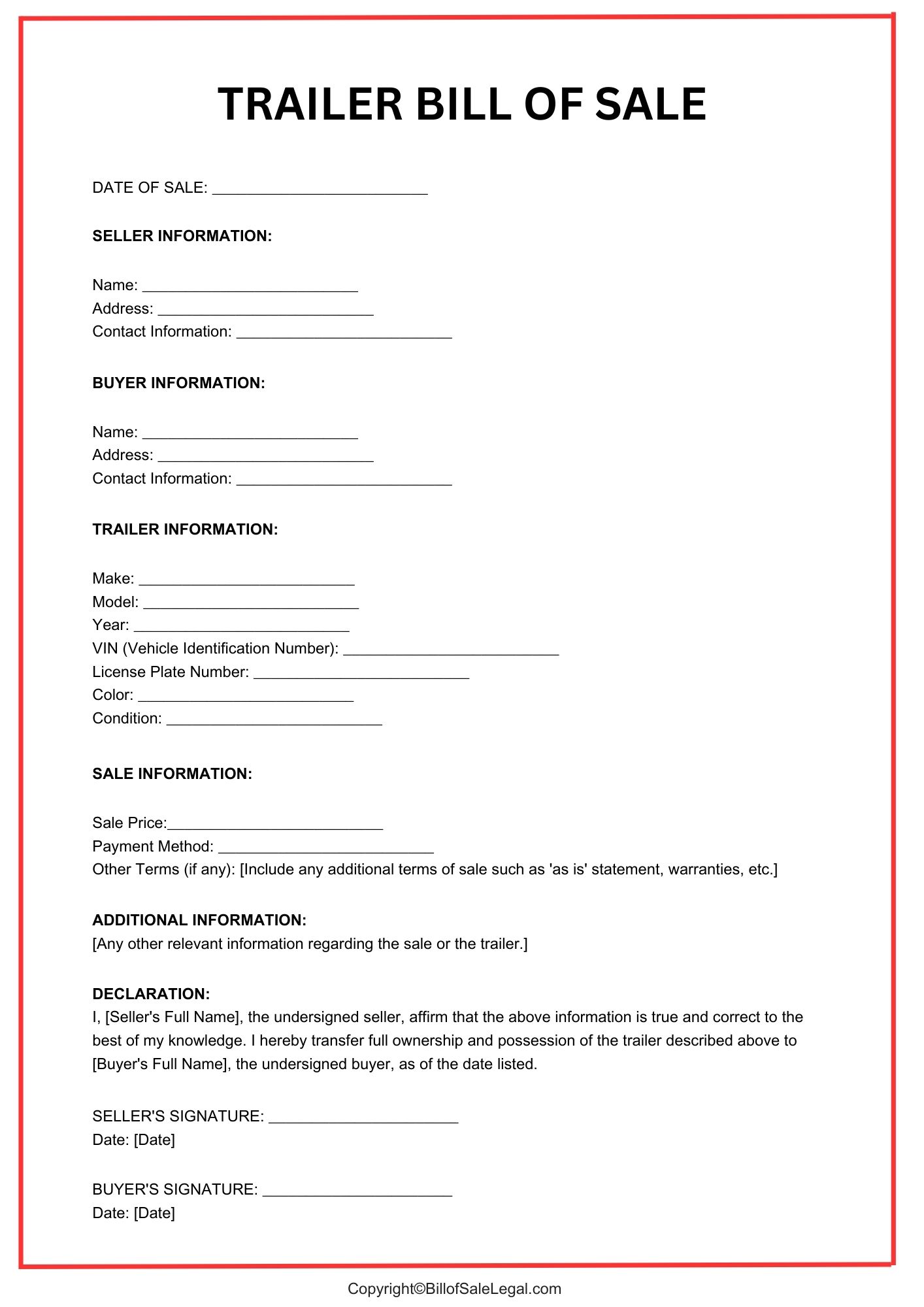
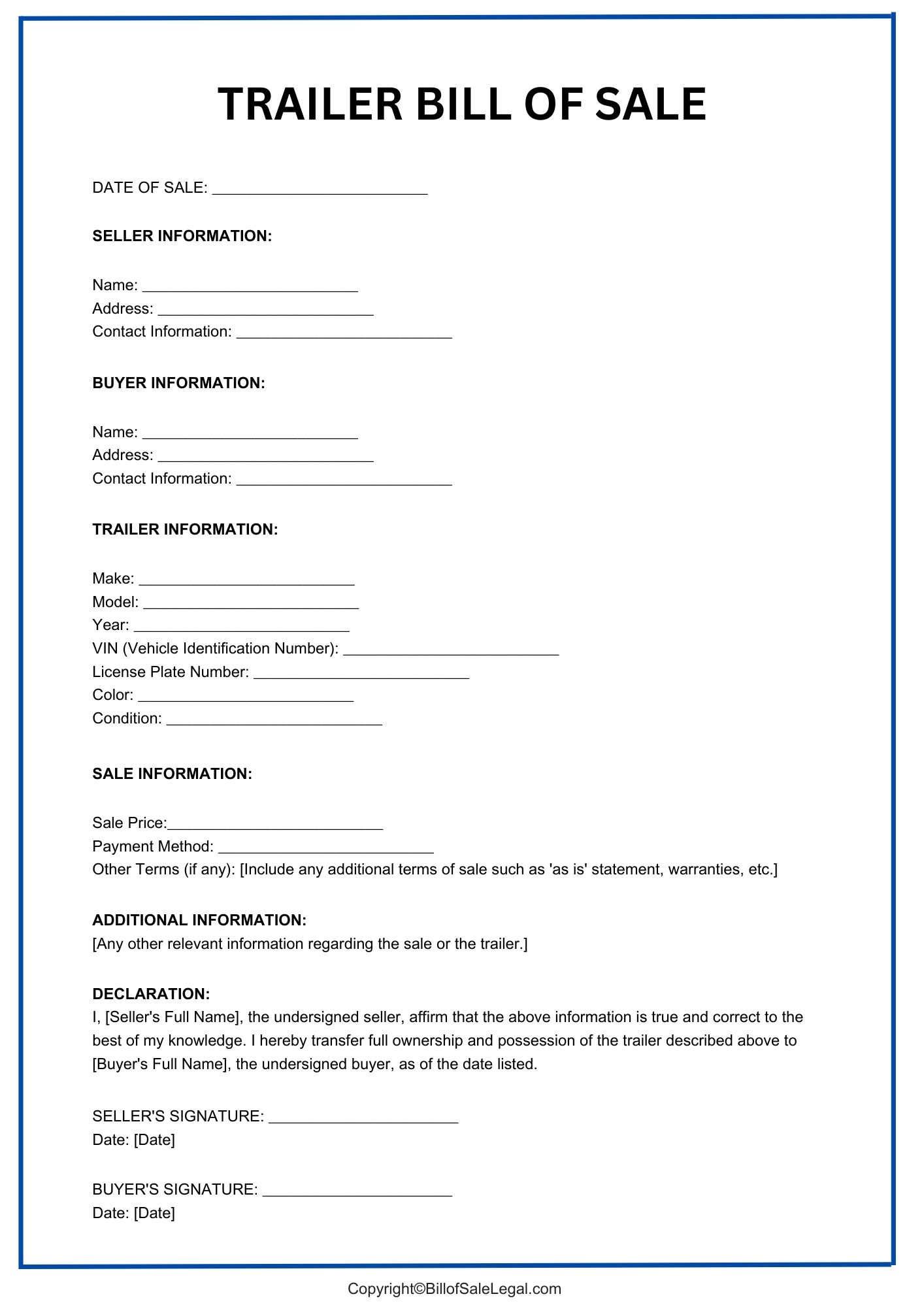
Why is a Trailer Bill of Sale Important?
A trailer bill of sale is important because it provides legal clarity and protection for both the buyer and the seller. For buyers, it acts as proof of purchase and ownership, which is necessary for registration, insurance, and future resale. For sellers, it confirms that responsibility for the trailer has been transferred, protecting them from liability related to accidents, fines, or misuse after the sale.
The document also helps prevent fraud by recording important trailer details, such as identification numbers and condition at the time of sale. In addition, a properly prepared trailer bill of sale ensures compliance with local laws and helps avoid delays during registration. Overall, it makes the transaction secure, transparent, and trustworthy.
FAQs Related to Bill of Sale for Trailer
The requirement depends on state or local laws. In many places, it is mandatory for registration or title transfer, while in others it is strongly recommended for legal protection.
The document should include buyer and seller details, trailer description, sale price, date of sale, and signatures of both parties.
Yes, a handwritten trailer bill of sale is usually valid as long as it contains all required information and signatures.
Not always. Some states may require notarization or accept it as added legal validity.
Yes, it is commonly used for both new and used trailers, especially in private sales.
Yes, tax authorities often use the sale price listed in the bill of sale to calculate applicable taxes.