
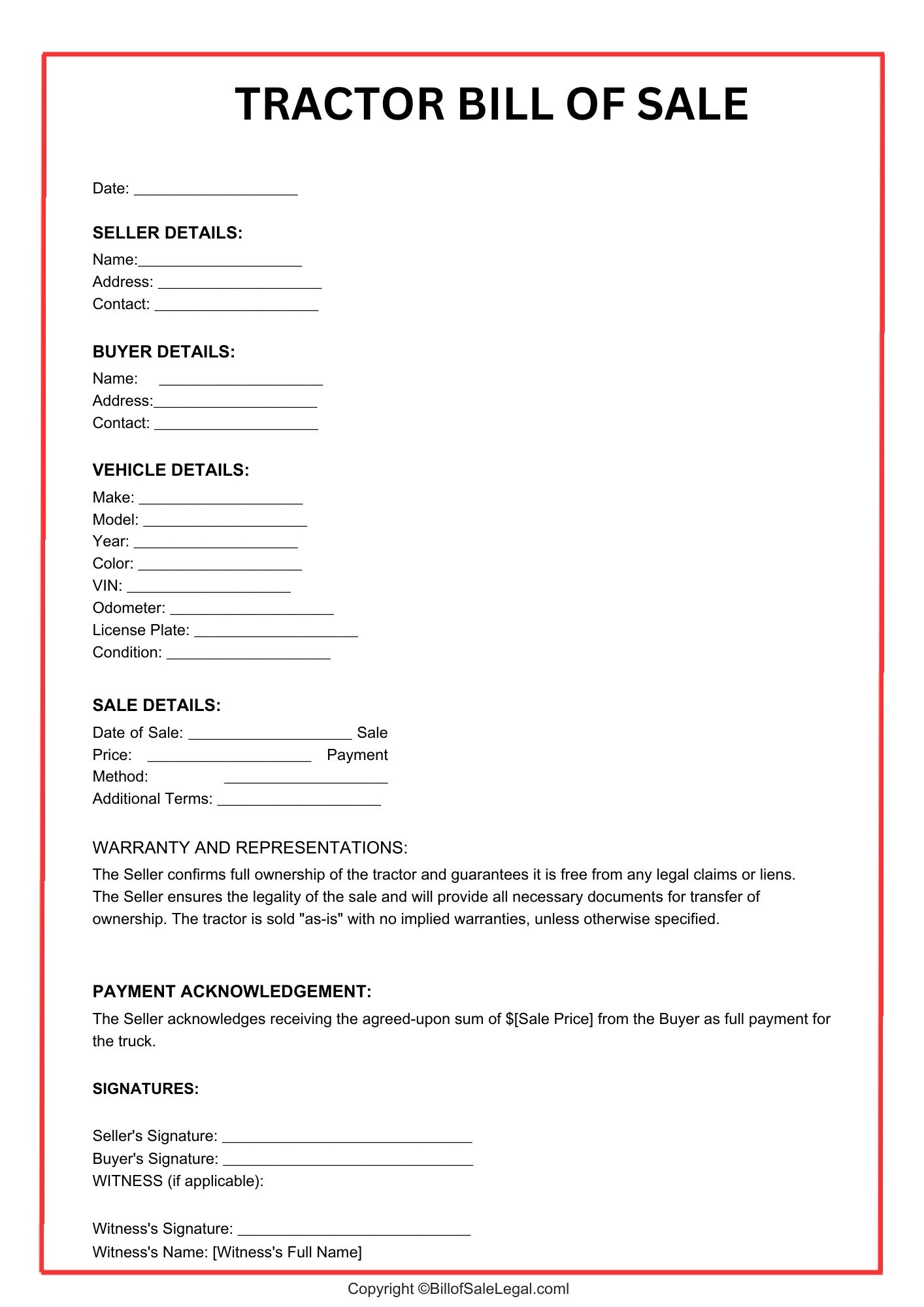
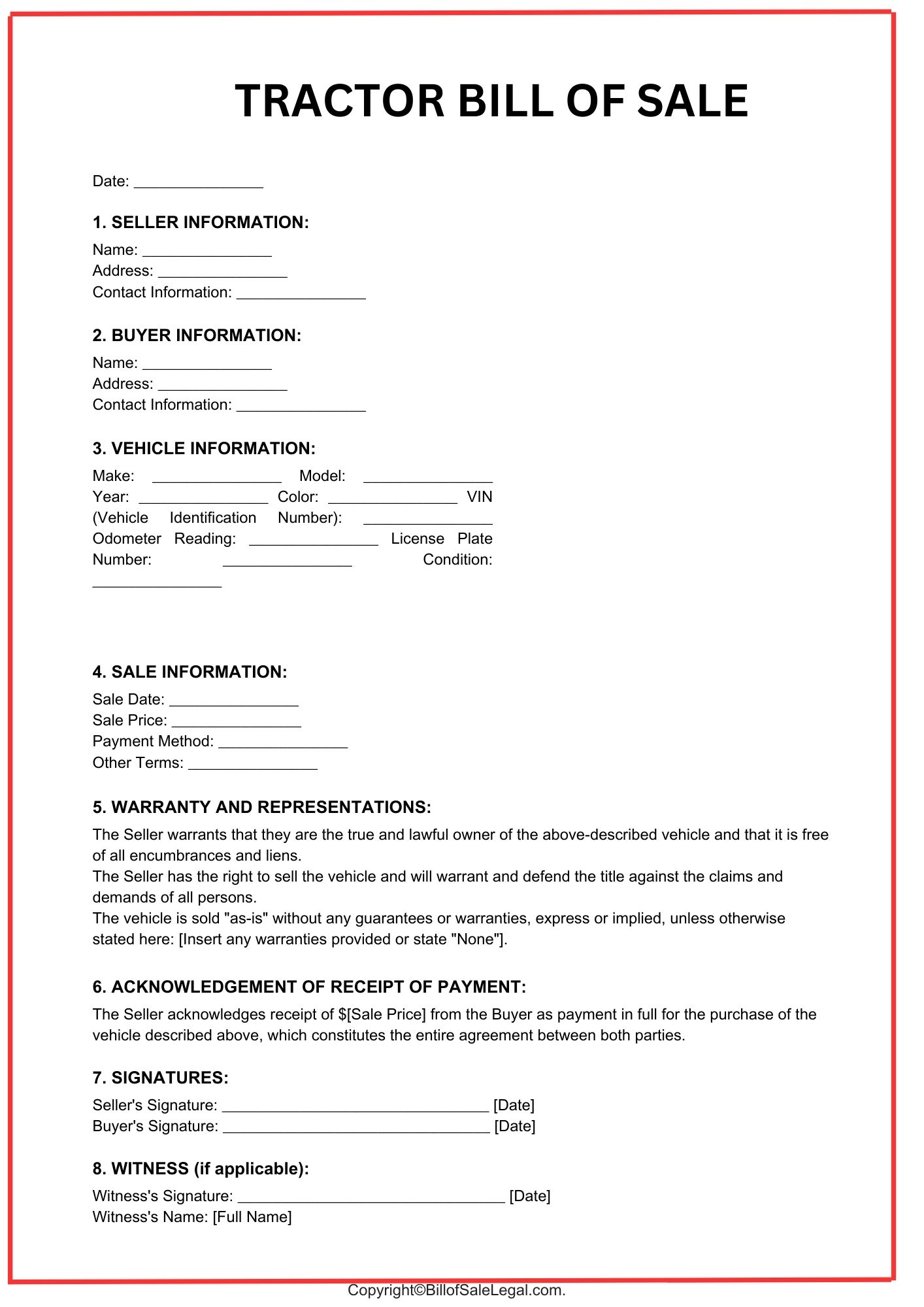
A Tractor Bill of Sale is a formal document that records the transfer of a tractor from one person to another. It includes key details about the transaction, such as the names and addresses of the buyer and seller, the tractor’s make, model, year and identification number, the sale price and the date of the sale.
Tractor Bill of Sale
Please Select State
AlabamaAlaskaArizonaArkansasCaliforniaColoradoConnecticutDelawareFloridaGeorgiaHawaiiIdahoIllinoisIndianaIowaKansasKentuckyLouisianaMaineMarylandMassachusettsMichiganMinnesotaMississippiMissouriMontanaNebraskaNevadaNew HampshireNew JerseyNew MexicoNew YorkNorth CarolinaNorth DakotaOhioOklahomaOregonPennsylvaniaRhode IslandSouth CarolinaSouth DakotaTennesseeTexasUtahVermontVirginiaWashingtonWest VirginiaWisconsinWyoming
Looking for Other Bill of Sale Categories?
What is a Tractor Bill of Sale?
A Tractor Bill of Sale is a legally recognized document that explains and confirms the transfer of ownership of a tractor from one party to another. It clearly lays out who is selling the tractor, who is buying it and the exact tractor involved in the transaction, leaving no room for confusion. By listing details such as the tractor’s make, model, year, condition and identification number, the document ensures the equipment can be accurately identified even years later. It also records the agreed purchase price and method of payment, showing that the sale was completed fairly and with mutual consent.
In practical terms, a tractor bill of sale protects the interests of both the buyer and the seller. For the buyer, it serves as solid proof of ownership that may be needed for registration, insurance, financing or tax reporting. For the seller, it documents the release of ownership and helps reduce future liability once the tractor has been sold. In the United States, this written record is often relied upon if questions or disputes arise later, making it an important and dependable part of any tractor transaction.
Tractor Bill of Sale Format — Preview & Download
Common Uses of Tractor Bill of Sale
Common uses of a tractor bill of sale extend across legal, financial and operational areas, making it an essential document in equipment transactions. Using a Tractor Bill of Sale Template also helps create a clear and standardized document. For buyers, it serves as official proof that the tractor was lawfully purchased, which is often required for registration, title transfer where applicable, insurance enrollment and loan or lease approvals. It also helps establish the purchase date and value of the tractor, information that is important for depreciation, resale planning and tax reporting.
- Insurance Purposes: Helps buyers obtain insurance coverage by verifying ownership and purchase details.
- Financing and Loans: Used by lenders as supporting documentation when applying for equipment loans or refinancing.
- Tax Reporting: Assists with accurate tax filings, depreciation claims, and capital asset records.
- Seller Liability Protection: Shows that the seller has transferred ownership and is no longer responsible for the tractor.
- Business Recordkeeping: Helps farms and companies track equipment purchases, sales and inventory.
- Dispute Resolution: Serves as a written reference if disagreements arise over ownership, payment or sale terms.
- Private Sales and Auctions: Adds clarity and professionalism to off-market sales and auction transactions.
Why Is a Tractor Bill of Sale Important?
A Tractor Bill of Sale is more than just a piece of paper, it is a vital document that protects both the buyer and the seller while making the sale official and transparent. It serves as clear proof of ownership, which is essential for registering the tractor, obtaining insurance or applying for financing. By clearly recording the sale price, date and condition of the tractor, it helps prevent misunderstandings and disputes between the parties. For sellers, it confirms that responsibility for the tractor has officially passed to the buyer, reducing future liability.
At the same time, buyers gain confidence knowing they have a legally recognized record of their purchase. In business, farming or private sales, this document also supports accurate recordkeeping, tax reporting and asset management, making it an indispensable part of any tractor transaction in the United States.
Types of Tractor Bill of Sale
When it comes to buying or selling a tractor, the type used can vary depending on the nature of the transaction. Choosing the right Tractor Bill of Sale format ensures the document is clear, complete and legally acceptable. Here are the most common types:
- Private Sale: This occurs when an individual sells a tractor directly to another individual. The bill of sale documents the transaction clearly, including the tractor’s details, sale price and condition, protecting both the buyer and seller.
- Dealer Sale: In this scenario, a licensed dealer sells a tractor to a buyer. The bill of sale from a dealer often includes additional details like warranties, service history and any applicable dealer terms, making it a more formal and detailed document.
- Auction Sale: Tractors sold at auctions require a bill of sale that records the winning bid, the date of sale, and the auction house details. This ensures a clear transfer of ownership from the auctioneer to the buyer.
- Farm or Business Equipment Sale: When tractors are sold as part of farm or business operations, the bill of sale often includes multiple pieces of equipment, detailed descriptions, and any agreed-upon terms for bulk sales. It also serves as an official record for accounting, tax purposes and asset management.
FAQs Related to Bill of Sale for Tractor
A Tractor Bill of Sale is a legal document that officially records the sale and transfer of a tractor from the seller to the buyer. It can be prepared as a printed document or saved digitally as a Tractor Bill of Sale PDF.
It is important because it proves ownership, protects both parties and may be required for registration, insurance or tax purposes.
Yes, even when buying from a dealer, a bill of sale provides a formal record of the transaction and any included terms or warranties.
Yes, a tractor bill of sale can be used for both new and used tractors to document the sale and transfer of ownership.
Notarization is not always required but some states or transactions may require it for legal or registration purposes.